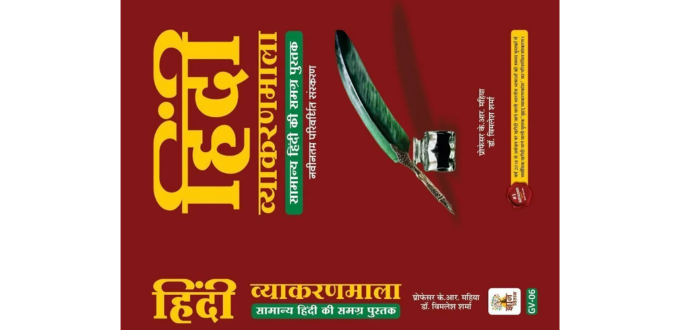
Preparing for a School Lecturer examination requires a structured understanding of the subject along with regular revision and question practice. For candidates appearing for Hindi-related examinations, grammar is particularly important because it forms a fundamental part of language knowledge and can influence performance across different sections of the paper. Topics such as संधि, समास, उपसर्ग, प्रत्यय, संज्ञा, सर्वनाम, विशेषण, क्रिया, वाक्य-विचार, शब्द-शक्ति, अलंकार, रस, छंद, मुहावरे, लोकोक्तियाँ, शुद्ध-अशुद्ध शब्द, and other areas of Hindi grammar require both conceptual understanding and repeated practice. Choosing an appropriate School Lecturer Hindi book can help candidates organize these topics systematically instead of depending on scattered notes and multiple unrelated sources.
A useful preparation strategy should also recognize that School Lecturer examinations may require candidates to study more than one subject depending on their chosen subject and examination pattern. Students preparing for Hindi may need focused Hindi grammar and literature resources, while candidates preparing for other subjects may look for a School Lecturer History book, School Lecturer Sanskrit book, or broader School Lecturer exam books. Gyaan Vitaan Prakashan provides examination-oriented books that can support this preparation process by giving aspirants structured study resources for different subjects. The right book should not simply contain information; it should help students understand concepts, revise efficiently, practise relevant questions, and prepare according to the requirements of the examination they are targeting.
Why Hindi Vyakaran Is Important for School Lecturer Preparation
Hindi grammar provides the foundation for understanding how the language works. A candidate may have a strong vocabulary and good reading ability, but competitive examinations can test specific grammatical concepts that require precise knowledge. Questions may involve identifying grammatical structures, correcting errors, understanding word formation, recognizing sentence patterns, or distinguishing between different linguistic concepts.
For this reason, Hindi grammar preparation should be approached as a systematic subject rather than something to be revised only before the examination. A well-organized School Lecturer Hindi book can make this process easier by arranging related concepts together and providing explanations that students can revisit during revision. Instead of moving between different websites, notes, and reference books, candidates can use a structured resource as the central part of their preparation and supplement it with practice where required.
What Makes a Useful School Lecturer Hindi Book?
The term “best” can mean different things for different candidates because preparation levels, study habits, and examination requirements vary. However, a useful Hindi book for School Lecturer preparation should ideally provide clear explanations, appropriate topic coverage, organized chapters, examples, revision support, and examination-relevant practice.
Students should also consider whether the book matches the syllabus of the particular examination they are preparing for. Examination patterns and syllabi can change, so candidates should always compare their preparation material with the latest official notification and syllabus. A book can be an important resource, but it should support—not replace—the official examination information.
Building Strong Hindi Grammar Fundamentals
The first stage of preparation should focus on developing a strong understanding of fundamental grammar. Topics such as संज्ञा, सर्वनाम, विशेषण, क्रिया, अव्यय, लिंग, वचन, कारक, काल, वाच्य, and sentence structure provide a foundation for more advanced questions.
Students often make the mistake of moving quickly through basic chapters because the concepts appear familiar. However, competitive examinations can test small distinctions within seemingly simple topics. A strong foundation allows candidates to approach more complex questions with greater clarity. Reading the explanation carefully and then solving relevant examples can help convert theoretical knowledge into usable examination skills.
The Importance of संधि and समास
संधि and समास are among the areas that often require focused preparation because they involve understanding how words are formed and combined. Candidates should learn the underlying rules rather than attempting to memorize isolated examples.
A structured study resource can make these topics easier to approach by presenting definitions, classifications, rules, examples, and practice questions in a logical sequence. Once the basic concepts are clear, candidates can practise identifying different forms and applying the relevant rules. Regular revision is important because these topics involve multiple categories and distinctions that can become confusing if studied only once.
Word Formation and Vocabulary-Based Grammar
Hindi grammar preparation also includes areas related to word formation and vocabulary. उपसर्ग, प्रत्यय, तत्सम, तद्भव, देशज, विदेशी शब्द, पर्यायवाची, विलोम, अनेकार्थी शब्द, and related concepts may require both understanding and memorization.
A good School Lecturer books collection can support this area by providing organized vocabulary and language resources. Candidates should avoid trying to memorize extremely large lists without context. Instead, they can divide vocabulary into manageable sections and revise them repeatedly. Writing difficult words separately or creating personal revision notes can also make later review more efficient.
Sentence Correction and Shuddh-Ashuddh
Questions related to correct and incorrect usage require attention to grammar rules as well as familiarity with standard Hindi usage. Candidates may need to identify errors involving spelling, gender, number, verb agreement, sentence structure, or word usage.
This area becomes easier when students understand why an expression is considered correct or incorrect instead of simply memorizing the answer. A well-structured book can explain the relevant rule and provide examples that demonstrate the difference. Regular practice can then help candidates recognize similar patterns in unfamiliar questions.
मुहावरे और लोकोक्तियाँ
Idioms and proverbs add another dimension to Hindi language preparation. Candidates may encounter questions involving meanings, appropriate usage, or identification of expressions.
Because these concepts can involve memorization, repeated revision is particularly useful. Students can maintain a small revision list of difficult मुहावरे and लोकोक्तियाँ and review them at regular intervals. Studying them in example sentences can also make their meanings easier to remember.
रस, छंद और अलंकार
Hindi preparation at the School Lecturer level may also require candidates to understand literary concepts such as रस, छंद, and अलंकार. These topics combine definitions, classifications, characteristics, and examples, which means students need both conceptual clarity and recall.
Rather than memorizing classifications without understanding them, candidates should learn the defining characteristics of each concept and then practise identifying them in examples. Tables or short personal notes can be useful during revision, but the main focus should remain on understanding the concepts correctly.
Hindi Literature and Grammar Should Be Prepared Together
Hindi grammar should not always be treated as an isolated section. Candidates preparing for a Hindi School Lecturer examination may also need to study Hindi literature, literary history, important writers, movements, genres, and other subject-specific areas according to the relevant syllabus.
Grammar can strengthen overall language understanding, while literature preparation develops familiarity with literary traditions and texts. A balanced study plan should therefore allocate sufficient time to both areas. The exact distribution of time should depend on the official syllabus and the candidate’s individual strengths.
How to Use a School Lecturer Hindi Book Effectively
Owning a good preparation book is only the first step. Students need to develop a method for using it. One effective approach is to study a topic carefully, underline or mark genuinely important information, solve the available practice questions, and revisit mistakes during revision.
Avoid highlighting every line because excessive marking can make revision less useful. Instead, identify definitions, rules, exceptions, examples, and concepts that are difficult to remember. These marked sections can become useful during the final revision phase when time is limited.
Why Revision Matters in Hindi Grammar Preparation
Hindi grammar includes many rules and classifications, which makes revision essential. Even when a candidate understands a topic during the first reading, some details may be forgotten after moving to another subject.
Revision should therefore happen throughout preparation rather than being postponed until the end. Candidates can revisit recently completed chapters after a few days and then again after a longer interval. This repeated exposure can help strengthen recall and identify areas that still require attention.
Practice Questions Turn Knowledge Into Exam Skills
Reading explanations can build understanding, but examination performance also depends on the ability to apply that knowledge. Practice questions help candidates become familiar with different question formats and identify concepts that they may not have fully understood.
After solving a question, students should pay attention to mistakes rather than focusing only on the number of correct answers. If an error occurred because a rule was misunderstood, the relevant chapter should be reviewed. If the candidate knew the concept but made a careless mistake, additional practice may help improve accuracy.
How School Lecturer Exam Books Support Different Subjects
Not every School Lecturer candidate prepares for Hindi. Depending on the examination and subject, candidates may need resources covering subjects such as history, Sanskrit, Hindi, or other disciplines. This makes it useful to choose a publisher with a broader range of examination-oriented resources.
For candidates preparing history, a relevant School Lecturer History book can provide subject-specific coverage, while Sanskrit aspirants may look for a School Lecturer Sanskrit book designed around their syllabus. The important consideration in every case is whether the book provides relevant content, organized chapters, and sufficient support for the specific examination.
Choosing a School Lecturer History Book
History preparation can involve a large amount of factual information along with interpretation of historical developments, events, movements, personalities, and chronology. A good School Lecturer History book should therefore help students organize information rather than presenting disconnected facts.
Candidates can use chapter-wise study followed by regular revision and question practice. Creating timelines for important events and comparing related historical developments can also make revision more manageable. The appropriate level of detail should be determined by the official syllabus and previous examination requirements.
Choosing a School Lecturer Sanskrit Book
Sanskrit preparation can involve grammar, literature, language concepts, texts, authors, and other syllabus-specific areas. A School Lecturer Sanskrit book should ideally present these topics in an organized way and explain difficult concepts clearly.
Students should pay attention to areas where they repeatedly make mistakes. Instead of repeatedly reading the entire chapter, targeted revision of weak topics can make preparation more efficient. As with Hindi and History, the official syllabus should remain the primary reference for deciding what should be studied.
Why Comprehensive School Lecturer Books Can Be Useful
Candidates often use several resources during preparation, but having a reliable core set of books can make the process more organized. Comprehensive School Lecturer books can provide a central reference point while allowing students to supplement specific topics with additional resources when necessary.
The advantage is not simply convenience. A structured book can help candidates maintain continuity in their preparation. They can track which chapters have been completed, which topics need revision, and which areas require additional question practice. This can reduce the feeling of studying without a clear direction.
Building a Complete School Lecturer Exam Books Collection
The right preparation collection depends on the candidate’s subject and the specific examination. A Hindi candidate may prioritize a Hindi grammar and literature resource, while a History candidate may require a history-focused book. Candidates preparing for multiple sections may need additional subject-specific resources.
A practical collection should not be unnecessarily large. More books do not automatically mean better preparation. Too many resources can sometimes create confusion because students repeatedly switch between sources instead of completing and revising one structured resource properly. The objective should be to select reliable School Lecturer exam books that align with the syllabus and use them thoroughly.
How Gyaan Vitaan Prakashan Supports School Lecturer Preparation
Gyaan Vitaan Prakashan focuses on educational and competitive examination books designed to support students preparing for different examinations and subjects. For School Lecturer aspirants, its range of subject-focused resources can provide a structured starting point for preparation.
For Hindi candidates, a suitable School Lecturer Hindi book can be used to organize grammar and language preparation, while candidates from other subjects can explore relevant resources such as a School Lecturer History book or School Lecturer Sanskrit book. This subject-specific approach allows students to choose resources according to their examination requirements instead of relying on a generic preparation book.
The value of an examination book ultimately depends on how effectively the student uses it. Gyaan Vitaan Prakashan resources can become part of a wider preparation strategy involving syllabus analysis, regular study, revision, practice questions, previous-paper analysis, and mock testing. This creates a more complete learning process than simply reading a book from beginning to end.
How to Create a Daily Hindi Preparation Routine
A consistent daily routine can make Hindi preparation easier to manage. Students can begin with a new grammar topic, spend time understanding examples, and then solve related questions. A separate revision session can be used to revisit previously completed chapters.
The exact number of hours should depend on the candidate’s overall schedule and examination timeline. Candidates preparing for multiple subjects should divide their time according to the syllabus and their individual strengths. The important point is consistency. Studying for a manageable amount of time every day is generally more sustainable than attempting extremely long sessions followed by several days without revision.
Common Mistakes Students Make While Preparing Hindi
One common mistake is focusing heavily on memorization without understanding the underlying grammar rules. Another is studying only the topics that feel easy while postponing difficult chapters. Some candidates also collect multiple books but fail to complete even one resource properly.
Another frequent problem is insufficient practice. Candidates may read grammar chapters several times but not solve enough questions to test their understanding. A balanced approach should combine reading, active recall, practice, error analysis, and revision.
How to Prepare During the Final Revision Stage
As the examination approaches, preparation should gradually shift from learning completely new material toward revision, practice, and assessment. Candidates should review important grammar rules, difficult vocabulary, literary concepts, and previously incorrect questions.
This is also the stage when concise personal notes can become valuable. Instead of reopening every chapter in full, candidates can review marked sections and concepts that previously caused difficulty. Mock tests and timed practice can then help candidates evaluate their preparation under conditions closer to the actual examination.
FAQs
Which is the best Hindi book for School Lecturer exam preparation?
The right book depends on the examination syllabus, candidate’s preparation level, and subject requirements. A useful School Lecturer Hindi book should provide systematic coverage of relevant grammar and language topics, clear explanations, examples, revision support, and appropriate practice material.
Is Hindi grammar important for School Lecturer preparation?
Hindi grammar can be an important part of Hindi subject preparation because it tests understanding of language rules, word formation, sentence structure, usage, and related concepts. Candidates should check the official syllabus to determine the exact topics and weightage applicable to their examination.
How should I use School Lecturer exam books?
Use them as structured study resources rather than simply reading them once. Study each topic, understand the concepts, practise questions, mark difficult areas, revise regularly, and analyze mistakes. The book should be combined with the official syllabus and other appropriate preparation methods.
Does Gyaan Vitaan Prakashan offer School Lecturer books for different subjects?
Gyaan Vitaan Prakashan provides subject-focused educational and examination preparation resources. Candidates can explore relevant School Lecturer books according to the subject they are preparing for, including Hindi and other subject areas.
What should I look for in a School Lecturer History book?
Look for organized coverage of the relevant syllabus, clear explanations, useful factual information, appropriate depth, and revision or practice support. Candidates should compare the book’s contents with the latest official syllabus before beginning preparation.
Is a School Lecturer Sanskrit book useful for exam preparation?
A dedicated School Lecturer Sanskrit book can provide structured coverage of Sanskrit topics relevant to the examination. Its usefulness depends on how closely its content matches the current syllabus and how effectively the student combines it with revision and practice.
Conclusion
Choosing the right study material can make School Lecturer preparation more organized, but the book itself is only one part of the process. For Hindi aspirants, a structured School Lecturer Hindi book can provide a central resource for learning grammar, vocabulary, sentence structure, literary concepts, and other syllabus-related topics. Regular revision and question practice are essential for turning that information into examination-ready knowledge.
Candidates preparing for other subjects can similarly select subject-focused resources such as a School Lecturer History book or School Lecturer Sanskrit book, while a broader collection of School Lecturer exam books can support preparation across different subjects when required. The key is to avoid collecting unnecessary resources and instead focus on books that align with the official syllabus and can be studied thoroughly.
Gyaan Vitaan Prakashan can be considered by candidates looking for structured examination-oriented study resources. By combining its relevant books with the official syllabus, consistent study, regular revision, question practice, and mock examinations, students can create a more organized preparation strategy. The ultimate objective is not simply to complete a book but to understand the subject, retain important concepts, identify weaknesses, and develop the confidence to apply knowledge in an examination setting.