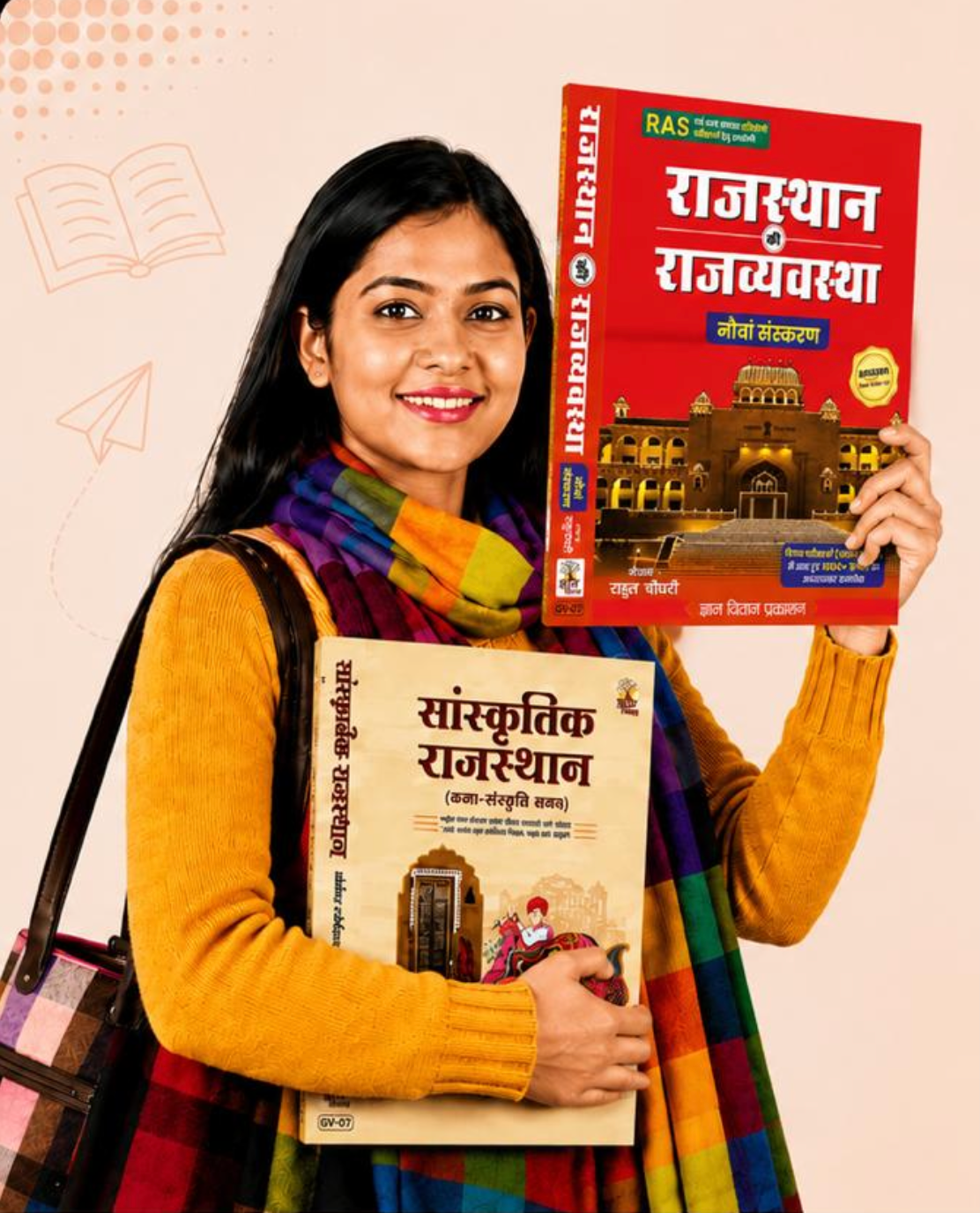
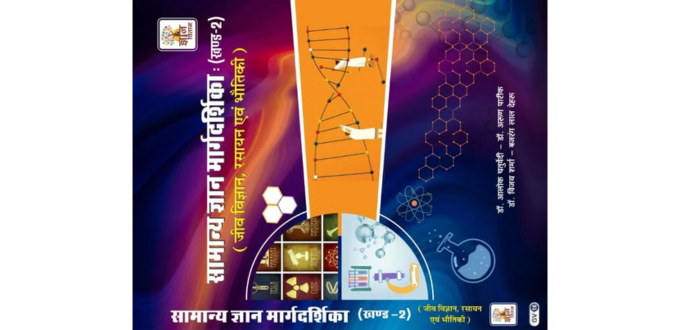
Preparing for Rajasthan government competitive examinations requires a clear understanding of the syllabus, consistent practice, and reliable study materials. General Science is an important subject in many competitive examinations because it tests candidates’ understanding of everyday scientific principles, basic physics, chemistry, biology, the human body, environmental science, and scientific developments. Students preparing for different Rajasthan recruitment examinations need to identify the topics relevant to their target examination and develop a systematic study routine. Choosing the Best Rajasthan General Science Book can make preparation more organised by helping students study concepts, revise important facts, and practise questions according to their learning needs. A suitable book should be easy to understand, logically structured, and aligned with the examination syllabus for which the student is preparing.
For aspirants looking for dependable Rajasthan competitive exam books, selecting the right study material is an important step towards building a strong preparation strategy. A well-chosen resource can help students understand difficult concepts, revise information efficiently, and identify areas that require additional practice. Gyaanvitaan Prakashan can be explored by students searching for educational books and preparation resources for competitive examinations. Before selecting a Rajasthan General Science Book, candidates should check the book’s latest edition, syllabus coverage, language, explanations, practice questions, and suitability for their target examination. Combining the right book with regular revision, previous-year question practice, and mock tests can help aspirants develop a more structured approach to their preparation.
Why Is General Science Important for Rajasthan Competitive Exams?
General Science helps assess whether candidates understand fundamental scientific concepts and can apply them to familiar situations. Depending on the examination, questions may cover physics, chemistry, biology, environmental science, human health, nutrition, scientific instruments, and everyday scientific phenomena. These topics are relevant because they test basic scientific awareness rather than requiring advanced technical knowledge in every case. However, the importance and depth of General Science vary according to the recruitment examination, so candidates should always review the official syllabus and examination pattern before deciding how much time to allocate to the subject.
For many aspirants, the main challenge is remembering scientific facts while also understanding the principles behind them. Memorising definitions alone may not be enough when a question asks students to identify an application, distinguish between similar concepts, or select the correct explanation for a scientific phenomenon. A structured Rajasthan General Science Book can support preparation by presenting information in an organised sequence. Students should focus on understanding the concept first, revising important facts regularly, and practising objective questions to check whether they can apply what they have learned.
How to Choose the Best Rajasthan General Science Book
Choosing a book should begin with the examination a student intends to take. Rajasthan Public Service Commission examinations, Rajasthan Staff Selection Board examinations, police recruitment tests, teaching eligibility examinations, and other recruitment processes may follow different syllabuses and testing patterns. A book suitable for one examination may not cover every topic required for another. Aspirants should therefore compare the book’s contents with the official syllabus and check whether its coverage matches their preparation level. This simple step helps students avoid studying irrelevant material while overlooking important subjects.
The Best Rajasthan General Science Book should also present information in clear language, use a logical chapter structure, and explain important concepts in a way that supports independent learning. Practice questions can help students evaluate their understanding, while revision summaries may make it easier to revisit important facts before an examination. Candidates should check the publication details, edition, accuracy of the content, and whether the practice material reflects the type of questions used in their target examination. Students considering Gyaanvitaan Prakashan should review the specific book’s title, author, edition, and listed features before purchasing to ensure that it meets their needs.
Important General Science Topics to Study for Rajasthan Exams
General Science covers several subject areas, and candidates should divide the syllabus into manageable sections instead of trying to memorise everything at once. The exact topics depend on the examination, but many basic science syllabuses include concepts from physics, chemistry, biology, and environmental science. Students should use the official syllabus as their primary guide and organise their study plan around the subjects it specifies. This approach makes preparation more focused and helps candidates track their progress across different chapters.
1. Physics: Understand Basic Scientific Principles
Physics topics may include motion, force, work, energy, power, heat, light, sound, electricity, magnetism, and basic scientific instruments. Students should understand definitions, units of measurement, fundamental laws, and everyday applications of these principles. For example, learning how light behaves, how electricity flows in a circuit, or how heat transfers between objects can help students connect textbook concepts with practical situations. Candidates should also practise numerical questions when they are included in the target examination syllabus. Understanding formulas and knowing when to apply them is more effective than memorising equations without understanding their meaning.
2. Chemistry: Learn Common Concepts and Applications
Chemistry preparation may involve elements, compounds, mixtures, atoms, molecules, acids, bases, salts, metals, non-metals, chemical reactions, and common chemical substances. Students should understand the differences between these concepts and learn the basic properties and uses of substances mentioned in the syllabus. Everyday chemistry can also include topics related to household materials, fuels, corrosion, water, and changes in matter. Candidates should create concise notes for important definitions and revise them regularly. Practising objective questions after completing each chapter can help identify confusion between similar terms and improve recall.
3. Biology: Focus on the Human Body and Living Organisms
Biology is often a substantial area of basic General Science preparation. Depending on the syllabus, it may include human body systems, nutrition, digestion, respiration, blood circulation, reproduction, cells, tissues, plants, microorganisms, diseases, and immunity. Students should understand how major body systems function and how different organs work together. It is also useful to distinguish between basic biological terms and understand the roles of essential nutrients. Instead of relying entirely on memorisation, candidates should use simple explanations and labelled diagrams where appropriate. Regular revision is particularly helpful for facts related to anatomy, biological processes, and classifications.
4. Environmental Science and Everyday Science
Environmental science connects scientific concepts with natural resources, pollution, ecosystems, biodiversity, climate-related issues, and conservation. Everyday science may include common scientific discoveries, household phenomena, basic technology, and the practical applications of scientific principles. These topics can be easier to understand when students relate them to familiar examples. For instance, understanding waste management becomes clearer when linked with pollution prevention, while learning about energy conservation can be connected with the responsible use of electricity and fuel. Candidates should study only the depth required by their examination and consult the official syllabus for any specific environmental or scientific-awareness topics.

Which Rajasthan Competitive Exam Books Should Aspirants Consider?
Students often search for Rajasthan competitive exam books that can help them prepare for several subjects in a systematic manner. However, it is important to distinguish between books focused on Rajasthan General Knowledge, General Science, reasoning, mathematics, and other examination-specific subjects. A General Science book is intended to support science preparation; it should not automatically be treated as a complete resource for every part of a competitive examination. Aspirants should build a collection of study materials based on their actual syllabus rather than buying multiple books that repeat the same information.
A practical approach is to select one main General Science resource, use the official syllabus as a checklist, and supplement the book with previous-year question papers and relevant mock tests. Additional books should be selected only when they address a clear learning gap, such as a topic that requires deeper explanation or more practice. Too many resources can make revision difficult because students may spend more time switching between books than consolidating their knowledge. Gyaanvitaan Prakashan is a relevant name for students to explore while researching educational books, but the specific content and suitability of each title should be confirmed through its current catalogue and product details.
How to Prepare General Science Using a Rajasthan General Science Book
An effective preparation strategy begins with a syllabus-based timetable. Students should divide the syllabus into topics and set realistic daily or weekly goals. A beginner might first focus on understanding basic concepts before moving to objective questions, while a student who has already studied the subject may spend more time revising facts and practising examination-style questions. The schedule should also account for the other subjects included in the target examination so that General Science preparation does not interfere with overall syllabus completion.
After completing a chapter, students should attempt practice questions and carefully review every incorrect answer. Mistakes often occur because of incomplete understanding, confusion between similar terms, incorrect recall, or careless reading. Identifying the reason behind each mistake helps students choose the right revision method. For example, a concept-related error may require rereading the explanation, while a memory-related error may call for repeated revision and short notes. A good Rajasthan General Science Book can serve as the central study resource, but consistent practice and self-assessment are necessary to determine whether the material has been understood.
The Role of MCQs and Previous-Year Question Papers
Multiple-choice questions allow aspirants to test their understanding and become familiar with objective examination formats. After studying a topic, candidates can answer relevant MCQs and review the explanation for each answer. This process helps reveal gaps in knowledge and reinforces correct concepts. Students should pay particular attention to questions they answered incorrectly through guessing, because an apparently correct result may not reflect a strong understanding of the subject.
Previous-year question papers are also useful because they help candidates examine the style, structure, and difficulty of questions used in a particular examination. Aspirants should choose papers relevant to their target recruitment test and check whether the syllabus or pattern has changed. Past questions can guide practice, but they do not guarantee that the same questions will appear in a future examination. Combining previous-year papers with a current syllabus, chapter-wise MCQs, and timed mock tests creates a more balanced preparation approach.
Common Mistakes to Avoid During General Science Preparation
One common mistake is beginning preparation without checking the official syllabus. Students may spend too much time on topics that are not required while neglecting areas that are specifically mentioned in the examination notification. Another mistake is memorising facts without understanding basic scientific principles. Although factual recall is important, understanding concepts makes it easier to solve unfamiliar questions and distinguish between closely related answer choices.
Candidates should also avoid postponing revision until the final stage of preparation. General Science contains many facts and concepts, and information can become difficult to recall if it is studied only once. A better strategy is to revise completed chapters at regular intervals and keep concise notes for difficult topics. Relying exclusively on practice questions without studying explanations can also limit learning. Aspirants should balance theory, practice, revision, and performance analysis throughout their preparation.
How Gyaanvitaan Prakashan Can Support Your Book Selection
Gyaanvitaan Prakashan can be explored by students searching for educational resources and books for competitive examination preparation. When considering a General Science title, aspirants should first check whether the book is intended for their particular examination and whether its content matches the current syllabus. Important details to review include the book’s title, author, edition, language, chapter coverage, explanations, and practice material. These details help students understand what the book offers and whether it suits their learning preferences.
Candidates should also consider how a selected book will fit into their daily study routine. A clearly organised resource can make it easier to divide chapters into study sessions, revise completed topics, and monitor progress. Students who need additional help with a particular concept may use supplementary resources, but their main preparation should remain aligned with the official syllabus. Before purchasing a title from Gyaanvitaan Prakashan, check the current product information to confirm availability and features rather than relying on assumptions about the contents of a particular edition.
Tips for Revising General Science Before the Examination
Revision should begin well before the final days of preparation. Aspirants can maintain concise notes containing important definitions, formulas, units, scientific terms, biological facts, and concepts that they find difficult to remember. These notes should complement the main book rather than replace a thorough first study of the syllabus. Reviewing a small section regularly is often more manageable than attempting to reread an entire book shortly before the examination.
Timed practice can also help students assess how effectively they recall information under pressure. After completing a mock test, candidates should review both incorrect answers and questions that took too long to solve. Topics associated with repeated mistakes should receive additional attention in the next revision session. Students should maintain a realistic timetable, avoid unnecessary last-minute resource changes, and confirm the latest examination instructions from the relevant official authority. A disciplined revision routine can help them approach the examination with better organisation and awareness of their preparation progress.
Conclusion
Choosing the Best Rajasthan General Science Book is an important step for students preparing for Rajasthan government competitive examinations. The right resource should match the target examination, explain concepts clearly, provide suitable topic coverage, and support regular practice and revision. By studying physics, chemistry, biology, environmental science, and other topics specified in the official syllabus, aspirants can build a stronger foundation in General Science.
For students researching Rajasthan competitive exam books, Gyaanvitaan Prakashan can be explored as part of the book-selection process. Candidates should verify the current edition, syllabus alignment, and features of the particular title before making a purchase. Combining a suitable Rajasthan General Science Book with previous-year question papers, MCQs, mock tests, and regular revision can help students organise their preparation more effectively. Ultimately, consistent effort, accurate study material, and a realistic preparation plan are essential for working towards competitive examination goals.
FAQs
1. Which is the Best Rajasthan General Science Book for competitive exams?
The best book is one that matches the syllabus of your target examination, explains concepts clearly, and includes relevant practice material. Check the latest edition, chapter coverage, language, and suitability for the examination before purchasing.
2. Is a Rajasthan General Science Book enough for government exam preparation?
A General Science book can support preparation for the science section, but it may not cover every subject in a competitive examination. Candidates should also study the other syllabus areas and practise relevant previous-year papers and mock tests.
3. Which topics should I study in Rajasthan General Science?
Common topics may include basic physics, chemistry, biology, environmental science, human health, and everyday scientific principles. The exact topics depend on the recruitment examination, so use the official syllabus as your guide.
4. How can I prepare General Science for Rajasthan competitive exams?
Start by reviewing the syllabus, study one topic at a time, practise MCQs, revise regularly, and analyse mistakes. Use previous-year papers and timed mock tests to assess your understanding and improve your preparation strategy.
5. Where can I find Rajasthan competitive exam books from Gyaanvitaan Prakashan?
Explore Gyaanvitaan Prakashan’s current catalogue or official product listings to identify relevant books. Check the title, edition, author, syllabus coverage, and availability before selecting a book for your target examination.